
How Many Sheep are you Counting at Night?
Have you ever had a night where you felt like you welcomed every hour lying awake in bed? Maybe you experienced racing thoughts, were too hot or too cold, had someone next to you snoring or shared your bed with a space hogging pet? There is a myriad of reasons this can happen. More importantly, however, how did this lack of quality sleep affect you during your waking hours?
Poor quality sleep has been studied by many organizations, scientists, and medical professionals. One such source, the Sleep Foundation, published an article online on July 17, 2023, describing the effects of sleep deprivation which I am including below. (Newsom, 2023). These effects are numerous and if you suffer from sleep deprivation, this information should be concerning.

What Are the Effects of Sleep Deprivation?
“Research has found that sleep deprivation affects systems throughout the body, leading to a wide range of negative effects.
Daytime sleepiness: Not getting enough sleep is a common cause of people feeling tired during the day. Daytime sleepiness can leave a person without the energy to do the things they enjoy and cause problems at work, school, and in relationships.
Impaired mental function: One of the most noticeable effects of sleep loss is cognitive impairment. As sleep debt increases a person becomes less alert and may have difficulty multitasking. Reductions in attention make a sleep-deprived person more prone to mistakes, increasing the risk of a workplace or motor vehicle accident.
Mood changes: Sleep loss can lead to mood changes and make a person feel more anxious or depressed. Without enough sleep, people may feel irritable, frustrated, and unmotivated. They may also struggle to deal with change and to regulate their emotions.
Reduced immune function: Sleep is important for maintaining a healthy immune system, so sleep deprivation can weaken immune function. In fact, research suggests that people who are sleep deprived are less responsive to the flu vaccine and are more likely to get infections like the common cold.
Weight gain: Sleep is important for maintaining a healthy weight. Not getting enough sleep can affect appetite and metabolism in ways that can lead to weight gain. Insufficient sleep has been associated with an increased risk of obesity.
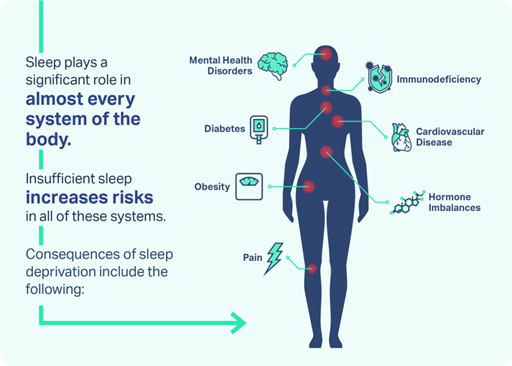
When sleep loss becomes a regular occurrence, chronic sleep deprivation can lead to changes in the nervous system, contribute to long-term health complications, and exacerbate chronic medical conditions.
Diabetes: A lack of sleep can make it more difficult for the body to process sugar, contributing to glucose intolerance and increasing the risk of type 2 diabetes.
Heart disease: During normal sleep, blood pressure drops in ways that are believed to support heart health. Sleep deprivation prevents this drop in blood pressure and triggers inflammation, heightening the risk of cardiovascular diseases, such as heart disease and stroke.
Mental health conditions: Sleep deprivation is closely linked to mental health. Sleep loss may increase the risk of mental health issues, and those issues can make it harder to get enough sleep.”
So, what can you do to improve your ability to fall and stay asleep each night, achieving the quality of sleep that you require and deserve? Many argue that it is in the routines we establish in the evening. I agree this is true, but I also believe it is what we do all day long that supports our ability to get those restorative zzz’s. Reaching back into the article published by the Sleep Foundation (Newsom, 2023), here are some useful strategies to help you reclaim your nighttime ‘field of dreams.’
“Make sleep a priority: Prioritize sleep health by creating a comfortable sleep environment and keeping a consistent sleep schedule. This means going to sleep and waking up at around the same time each day and avoiding the temptation to stay up later or sleep in on the weekends.
Combat stress: To combat bedtime stress, give yourself plenty of time to wind down from the day. Use this time to listen to calming music, stretch, or write in a journal. Boost your ability to relieve stress by trying out new relaxation techniques and seeing what helps the most.
Time your light exposure: Ambient light can signal to the body whether it is time to be awake or prepare for sleep, so be intentional about light exposure. Try to get at least 30 minutes of sunlight exposure during the day and then dim or turn off lights in the evening. Shut off phones, TVs, and computers at least an hour before bed.
Watch your caffeine intake: Caffeine can linger in the body for eight or more hours, so consuming caffeine in the afternoon may affect how long it takes to doze off at bedtime.
Nap wisely: Although they cannot replace quality nighttime rest, naps can be a helpful tool to improve daytime alertness. If naps are too long or poorly timed, though, they can make it more difficult to fall asleep in the evening. Adults should aim for naps that are no longer than 20 minutes and should avoid napping in the late afternoon.
Stay active: Regular exercise can make it easier to get to sleep at bedtime. Try to get at least 30 minutes of physical activity every day, but it is best to avoid highly strenuous exercise too close to bedtime.”
While this article highlights several actions that each of us can take to increase our sleep, there are additional factors that can improve our sleep quality. Let’s talk about the obvious. Buy the dog or cat their own luxurious bed! (This hasn’t worked in our household), wear noise cancelling headphones, sleep in separate bedrooms if you have a noisy partner or use an app that offers sleep music or soundscapes. Limit alcohol consumption, explore the possibility that you may have one of numerous sleep disturbing medical conditions such as sleep apnea, asthma, heartburn, restless leg syndrome, diabetes or cardiovascular disease and understand how different stages of life can impact sleep. Self-exploration, experimentation, and if necessary, working with trained a health professional can uncover your best sleep “prescription” and could make a world of difference in your everyday life.
I don’t know about you, but I am not living my best life when I am sleep deprived. Truth be told, I am a bear of epic proportions on those days and there is not enough caffeine in the world to make it go away! We could all use some of these tips to improve the quality of our sleep and quality of life. This is not something we should ignore. Our health can depend on this. You deserve restful and restorative nights of sleep.
Newsom, R. S. (2023, July 17). www.sleepfoundation.org. Retrieved from Sleep Foundation: https://www.sleepfoundation.org/sleep-deprivation/effects-of-sleep-deprivation
